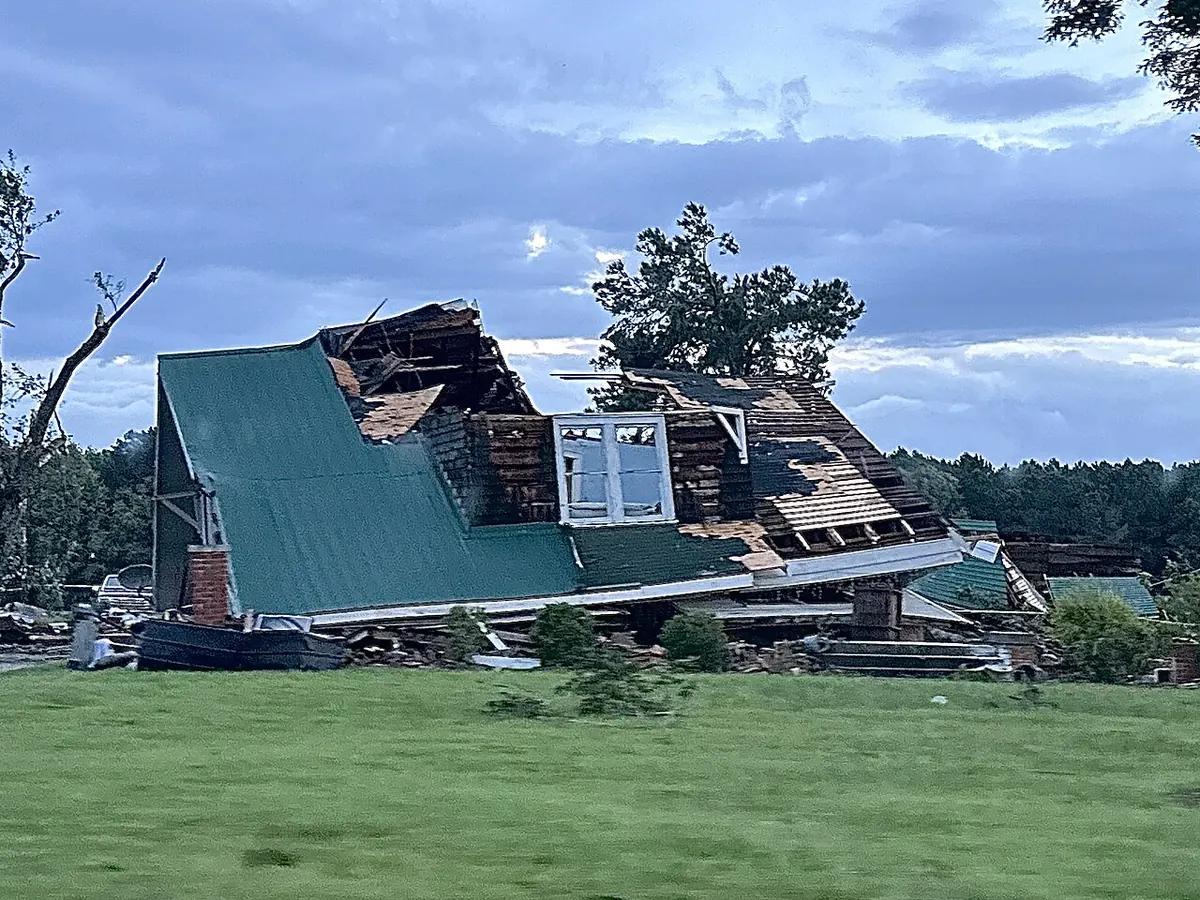
Illinois is wind country
The state’s storm record is long: the 1925 Tri-State Tornado through Murphysboro, the 1990 Plainfield tornado, the November 2013 outbreak that devastated Washington, the 2021 Naperville–Woodridge tornado and the March 2023 storms that collapsed a theater roof in Belvidere. Derechos add another layer. The August 2020 derecho crossed northern Illinois with hurricane-force gusts, and the May 2009 “inland hurricane” left Carbondale and much of southern Illinois without power for days.
What wind does that estimates miss
- Uplift damage. Shingles that lifted and resealed show creased tabs and broken seals that are easy to overlook but make the roof unrepairable.
- Racking and framing. Twisted trusses, cracked drywall corners and doors that no longer close can signal structural movement.
- Debris and tree removal. Removing trees from a structure, hauling debris and protecting the opening are often underpriced or capped incorrectly.
- Windows, siding and soffits peppered by wind-borne debris on several elevations.
- Code upgrades triggered once a significant portion of a structure must be rebuilt.
Total losses and near-total losses
When a home is heavily damaged, the dispute often becomes whether to repair or rebuild, and what rebuilding really costs at today’s prices. We prepare a full replacement estimate and compare it with policy limits, extended replacement cost endorsements and ordinance-or-law coverage so you can see the whole picture.
After the storm
Protect the property, photograph everything before cleanup, keep receipts for tarps and board-up, and request the carrier’s full estimate in writing. Our deadline calendar helps you track the dates that follow.
Frequently asked questions
Is a derecho covered the same way as a tornado?
Usually. Most property policies cover windstorm without distinguishing tornadoes from straight-line winds, though deductibles and exclusions vary. Check your declarations page.
The carrier says my cracked drywall is settlement. What now?
Document when the cracks appeared and where they are. Patterns at corners and openings after a wind event can support storm-related movement. A structural engineer may help.